
Detectors
RoentDek detectors are designed for precise time- and position-resolved measurements of individual particles and photons in advanced research applications. The delay-line detector (DLD) and hexagonal delay-line detector (HEX) combine microchannel plates (MCPs) with sophisticated delay-line anodes to determine both the time of flight and position of impact of detected particles with high precision. The HEX design provides enhanced multi-hit capability with virtually zero dead time, enabling the reliable detection of multiple particles arriving within very short time intervals. In addition, RoentDek offers MCP-based detectors (DET) for applications requiring pure timing information, as well as phosphor screen detectors (DET-P) providing additional spatial readout.
An overview of available detectors can be found in our product list. To ensure that the detectors are compatible with your application, please refer to the Detector Guide. For further assistance or to discuss your specific requirements, contact us.
Delay-Line Detector
for single particle imaging
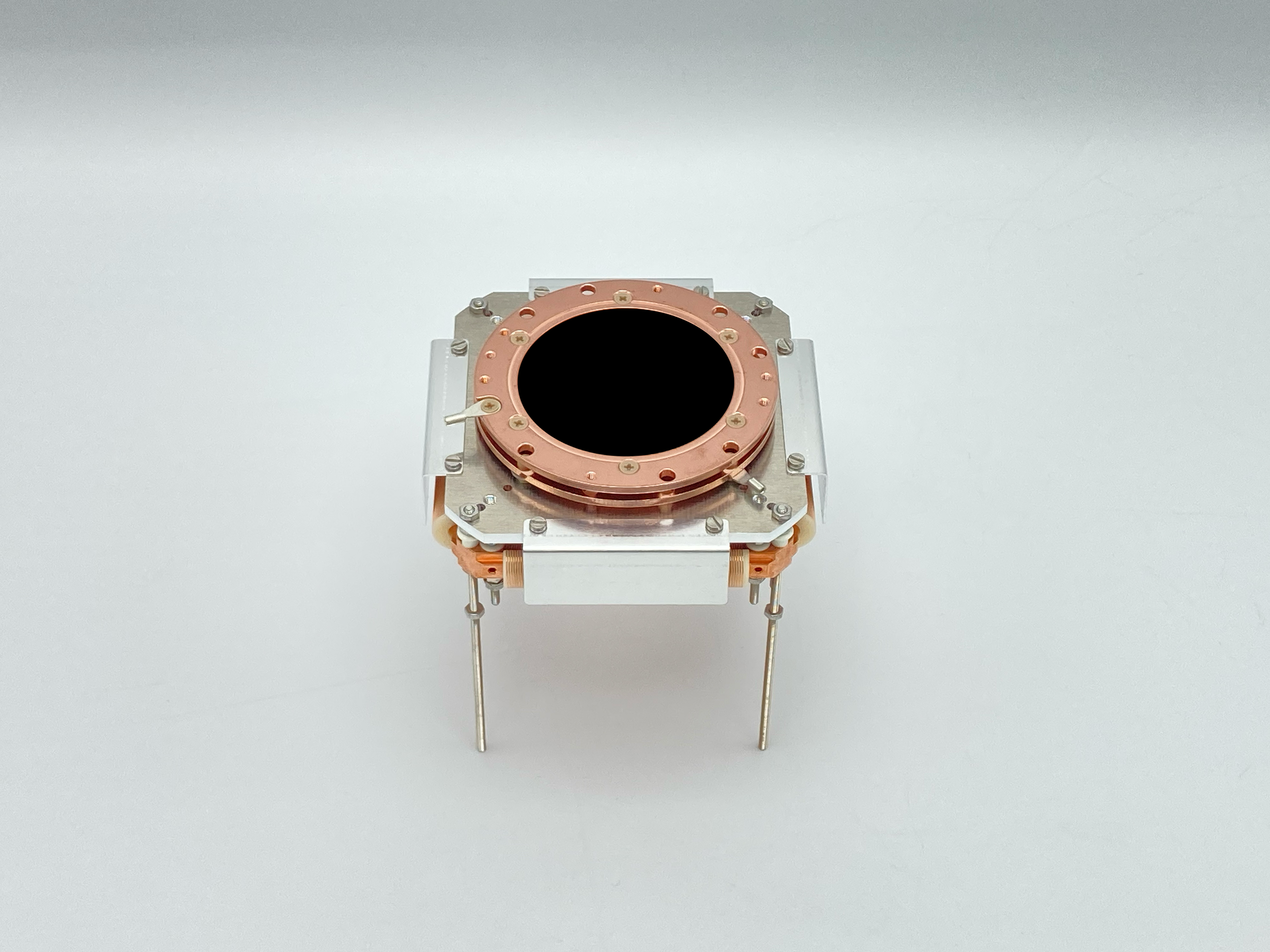
Time- and Position-Sensitive Delay-Line Detector (DLD)
- spatial resolution: better than 45 µm RMS (best result: 17 µm RMS)
- temporal resolution: better than 100 ps RMS (best result: 21 ps RMS)
- active diameter: 40 mm, 80 mm (up to 150 mm)
- usable count rate ranges from few Hz to several MHz
- microchannel plates (MCPs) included
Multi-Hit Capable Detector
with “zero dead time” (HEX design)
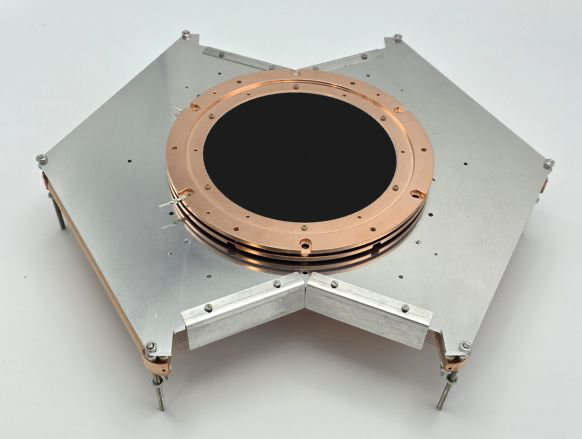
3-layer design for zero dead time (HEX)
- developed for multi-particle events (e.g. molecular breakups)
- enhanced image linearity
- active diameter: 40 mm up to 120 mm
- for advanced applications
- option: delay-line detector with central hole
- option: readout with fast ADC-digitizers
MCP Detector
for particle counting / TOF
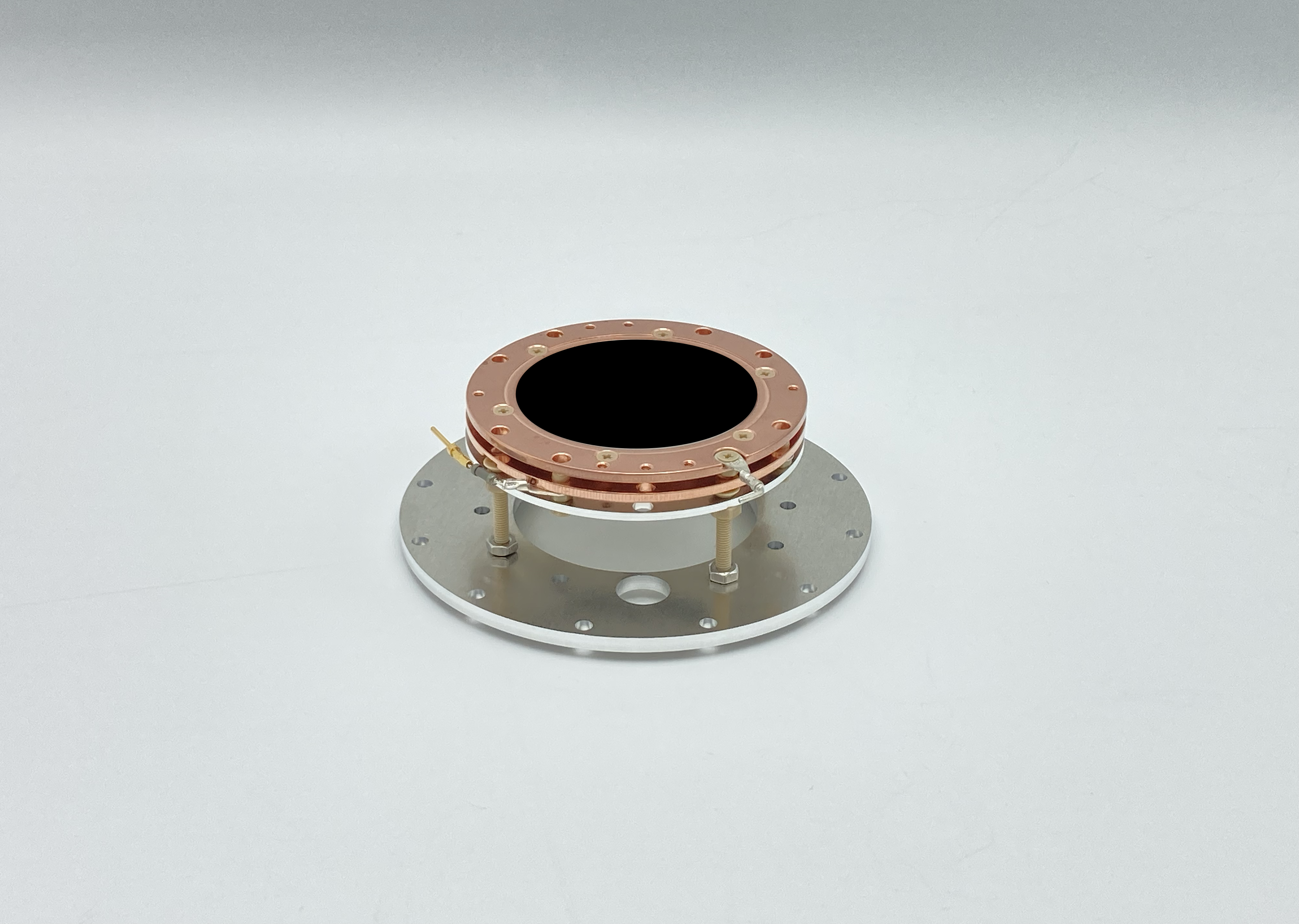
MCP Detector for pure timing applications (DET)
- temporal resolution: better than 100 ps RMS (best result: 21 ps RMS)
- active diameter: 25 mm, 40 mm, 80 mm (up to 150 mm)
- usable count rate ranges from few Hz
to several MHz - microchannel plates (MCP) included
- timing anode for TOF only: DET 25/40/75
MCP Detector with Phosphor Screen
for particle counting and imaging
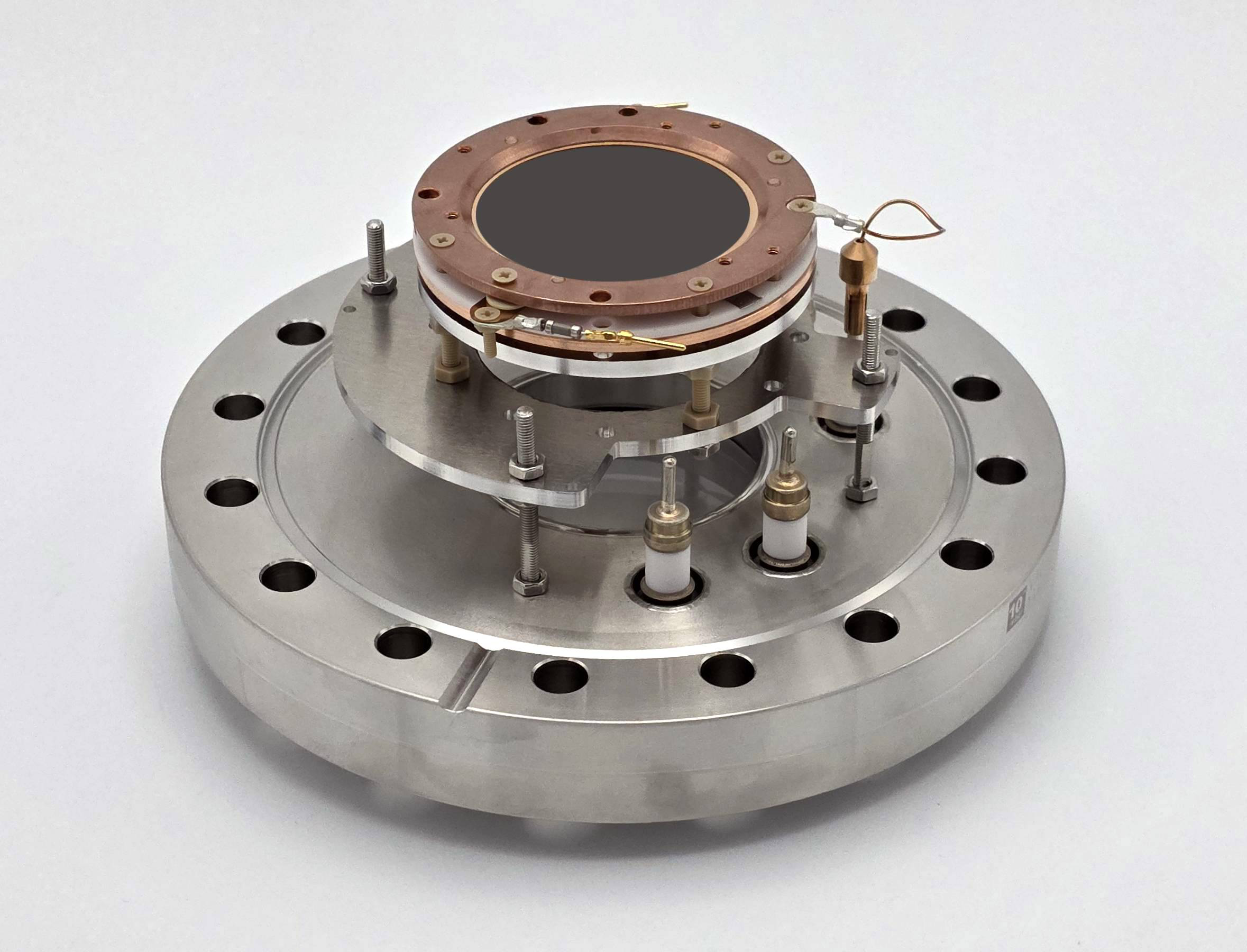
- conventional MCP detector with phosphor screen (p43/p47) in various sizes (25 mm, 40 mm, 75 mm, 105 mm) with or without timing capability
- special solutions with center holes on request
Channeltron
mounted on flange – ready to use
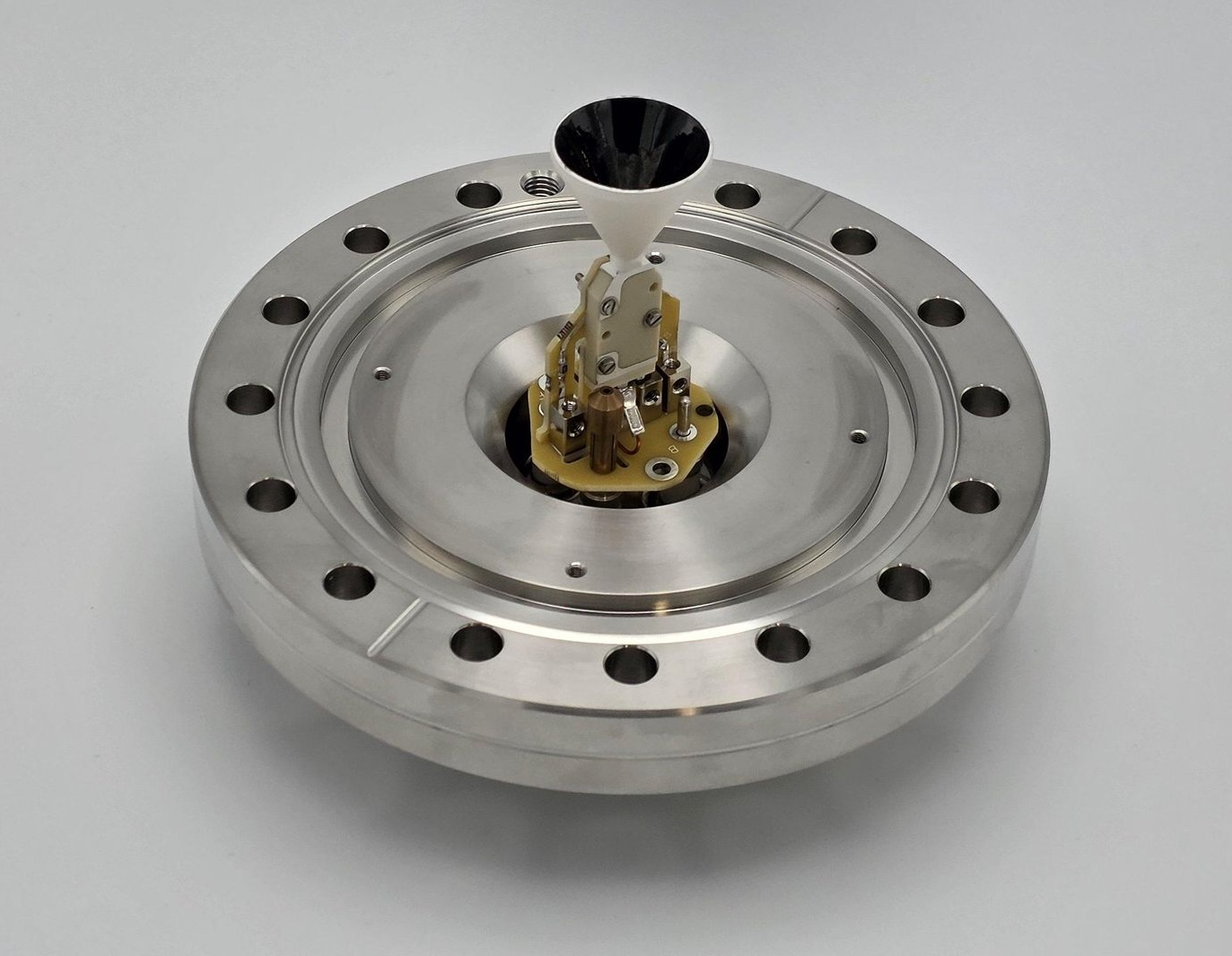
- for single particle counting
- including signal decouplings and amplifier
- also available with discriminator and counting electronics
- adjustable height over flange
- active diameter: 5 mm up to 25 mm
- We use channeltrons from Sjuts.
Please see their website for more information.
Other Detectors and Accessoires
photo multipliers / solutions for > 10 kV
- photo multiplier tubes combined with imaging detectors
- special solutions for extreme high voltage applications > 10 kV and high magnetic fields
- efficiency-enhancing coatings on MCPs
- meshes for field separation with frame
- calibration or pinhole masks
- ceramic insulators and UHV resistors
Delay-Line Detector
for single particle imaging
Time- and Position-Sensitive Delay-Line Detector (DLD)
- spatial resolution: better than 45 µm RMS (best result: 17 µm RMS)
- temporal resolution: better than 100 ps RMS (best result: 21 ps RMS)
- active diameter: 40 mm, 80 mm (up to 150 mm)
- usable count rate ranges from few Hz to several MHz
- microchannel plates (MCPs) included
Multi-Hit Capable Detector
with “zero dead time” (HEX design)
3-layer design for zero dead time (HEX)
- developed for multi-particle events (e.g. molecular breakups)
- enhanced image linearity
- active diameter: 40 mm up to 120 mm
- for advanced applications
- option: delay-line detector with central hole
- option: readout with fast ADC-digitizers
MCP Detector
for particle counting / TOF
MCP Detector for pure timing applications (DET)
- temporal resolution: better than 100 ps RMS (best result: 21 ps RMS)
- active diameter: 25 mm, 40 mm, 80 mm (up to 150 mm)
- usable count rate ranges from few Hz
to several MHz - microchannel plates (MCP) included
- timing anode for TOF only: DET 25/40/75
MCP Detector with Phosphor Screen
for particle counting and imaging
- conventional MCP detector with phosphor screen (p43/p47) in various sizes (25 mm, 40 mm, 75 mm, 105 mm) with or without timing capability
- special solutions with center holes on request
Channeltron
mounted on flange – ready to use
- for single particle counting
- including signal decouplings and amplifier
- also available with discriminator and counting electronics
- adjustable height over flange
- active diameter: 5 mm up to 25 mm
- We use channeltrons from Sjuts.
Please see their website for more information.
Other Detectors and Accessoires
photo multipliers / solutions for > 10 kV
- photo multiplier tubes combined with imaging detectors
- special solutions for extreme high voltage applications > 10 kV and high magnetic fields
- efficiency-enhancing coatings on MCPs
- meshes for field separation with frame
- calibration or pinhole masks
- ceramic insulators and UHV resistors
The following general facts about RoentDek detectors are primarily written for delay-line detectors (DLD and HEX), but are mostly valid for timing-only detectors (DET) as well. The list may not be complete, but it provides a basic reference for further considerations:
What RoentDek Delay-Line Detectors can do:
- detect single atomic particles, molecules or photons (all summarized as “particles” from now on – see a list of particle species with decent quantum efficiency)
- simultaneously determine position and arrival time for individual particle hits with < 0.1 mm resp. < 1 ns precision, with continuous rates of at least 1 MHz
- correlate particle hits on different detectors with external parameters or trigger signals (coincidence), or several subsequent particle hits on the same detector (example: COLTRIMS).
What RoentDek Delay-Line Detectors cannot do:
- operate without decent (see below) vacuum environment (unless sealed)
- operate in magnetic fields beyond a certain strength (see below)
- operate in cryogenic conditions (see below)
- detect particles if the rate continuously exceeds a certain total number or a certain local number per detector area (see below)
- detect particle showers above a certain instantaneous flux (rate) even if the average rate integrated over a longer period (i.e. few seconds) is modest. However, the RoentDek detectors have certain “multi-hit” abilities (especially with hexanode) which make them superior to other single particle counting methods like for example charge-sharing anodes. For detailed information please contact us.
Typical Detector Performance and Operational Limits:
- temporal resolution: 100-200 ps FWHM
- spatial resolution: < 0.1 mm RMS
- overall linearity: < 0.3 mm (< 0.1 mm for hexanode)
- count rate: average up to 1 MHz, locally: < 10 kHz/mm²
- dead time: 35-150 ns depending on detector size (DET: 10 ns, HEX: please inquire)
- detection efficiency: see a list of particle species
Note, that the detectors can yield even better performance for optimal electronics choice and under well-tuned operational settings.
Optimal performance (near the specs limits) can only be expected - if the detector is installed and operated within its specifications,
- if operational parameters are adjusted according to the manual,
- in absence of interference from external noise sources and
- as long as the MCP stack performs normally (MCPs are “consumables”, please see below)
Therefore these specs cannot be considered as “hard” specs and will also depend on the detector type and the electronics setup that is used.
Performance Specs of RoentDek Delay-Line Detectors that cannot be guaranteed at all:
If a customer’s application requires “hard“ specs on dark count rate, lifetime, quantum efficiency, rate tolerance, pulse height, minimum gain, gain uniformity and stability it is necessary to submit these to the MCP manufacturers because it is basically the MCP stack quality that defines these specs.
Typical dark count levels of those MCP stacks provided through RoentDek are a few counts per second and square cm plus spurious local “spots” (often near the edge) with emission of a few counts per second. The gain uniformity and pulse height distribution is typically sufficient to achieve a uniform response over the active detection area.
What compromises the Detector Performance:
- operation at too low MCP gain
- operation in high noise environment, i.e., electromagnetic noise from turbo pump controllers, high voltage pulse switches (e.g. Pockels cells) and noisy mains power
- presence of ground loops or inferior ground connections
- operation in cryogenic condition (reduction of count rate tolerance for standard MCP)
- operation in B-field > 0.5 mT (> 5 mT for resistive screen detectors, > 500 mT for DET)
In the following a few facts are summarized that would not only compromise the detector performance but may also lead to premature aging, wear-out or permanent performance loss or may seriously (and sometimes instantly) damage a detector. The list may not be complete: - exposure to > 450 K or < 150 K, even when under vacuum conditions and unbiased → damage (unless unit is especially approved for increased thermal stress tolerance up to 600 K)
- any significant heating or cooling in ambient air → damage (thermal oxidation resp. condensed water deposition when cooled below dew point)
- mechanical shocks/stresses → damage
- physical contact of solid particles with anode wires or MCP surfaces, including dust → permanent performance loss or damage
- storage in humid air → permanent performance loss or damage (if exposure is prolonged)
- exposure to certain fluids/solvents and vapors (which includes moisture from ambient air) → permanent performance loss or damage
- operation in poor vacuum conditions → damage (> 0.1 Pa) or wear-out (> 1 mPa)
- exposure to normal air while the MCPs are still warm after bake-out→ damage
- electrostatic discharges due to erroneous voltage settings or unsufficient clearing between biased detector parts and solid parts in the vicinity → damage, may also damage electronic units
- corona-type discharges (“glow”) for the same reasons → premature aging or damage
- presence of strong UV light or charged-particle sources in the vicinity of the detector, e.g. engaged ion gauges or ion pumps → premature aging or damage
- accumulated exposure to keV (or higher) particles (even when not biased) → wear-out
- exposure to excessive particle rates when biased → wear-out or damage
- continuous operation at the limits for steady operation → wear-out
- operation at excessive MCP bias voltage → wear-out or damage